京焼 Kyo-yaki
京焼と京薩摩、粟田焼 そして野々村仁清
Kyo-yaki and Kyo-Satsuma, Awata-yaki, and then Nonomura Ninsei.
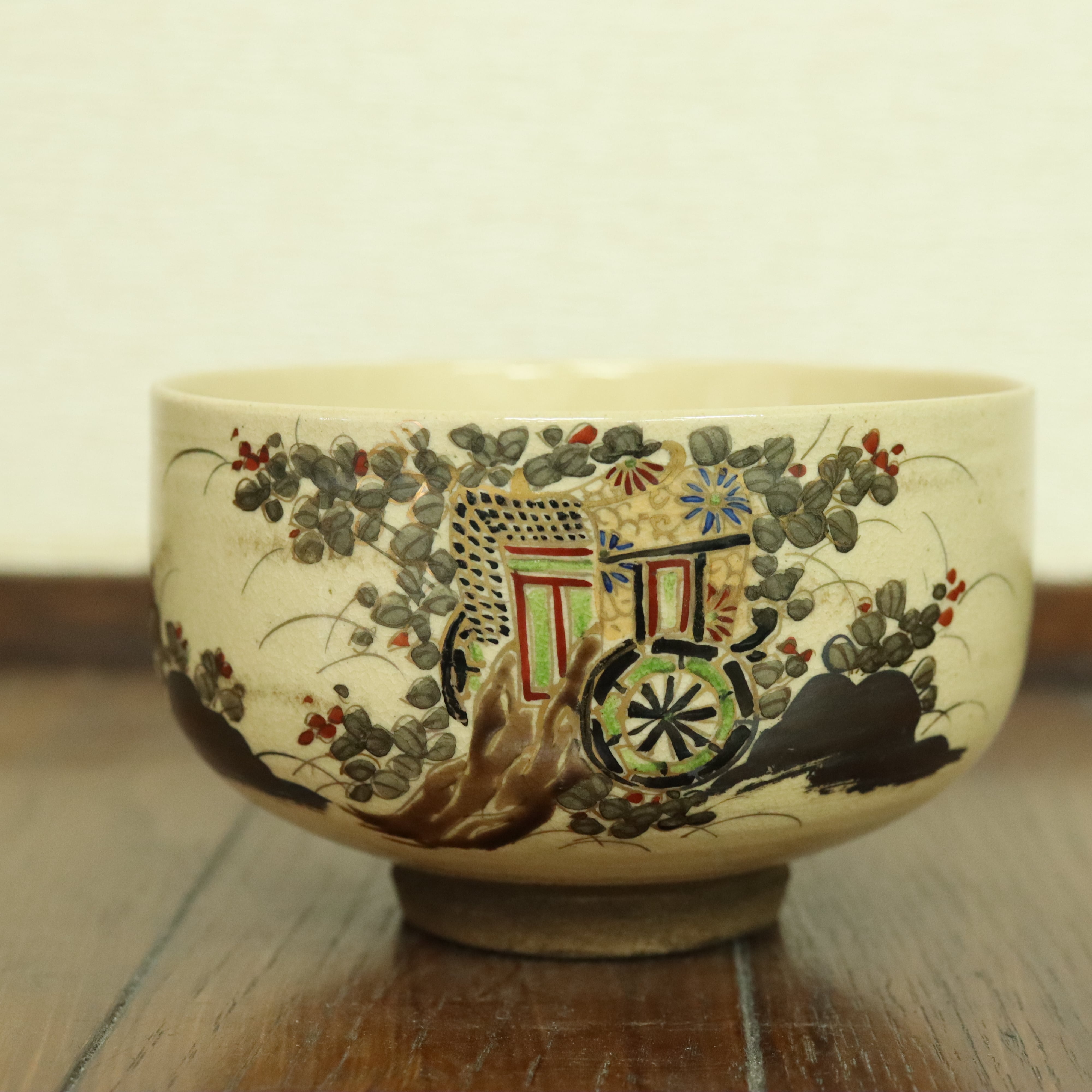
この茶碗は江戸時代の京焼の名工、野々村仁清風に作った後世の写しの作品です。
上品でやさしい佇まいで、美しい金彩と色彩で牛車の図が描かれています。
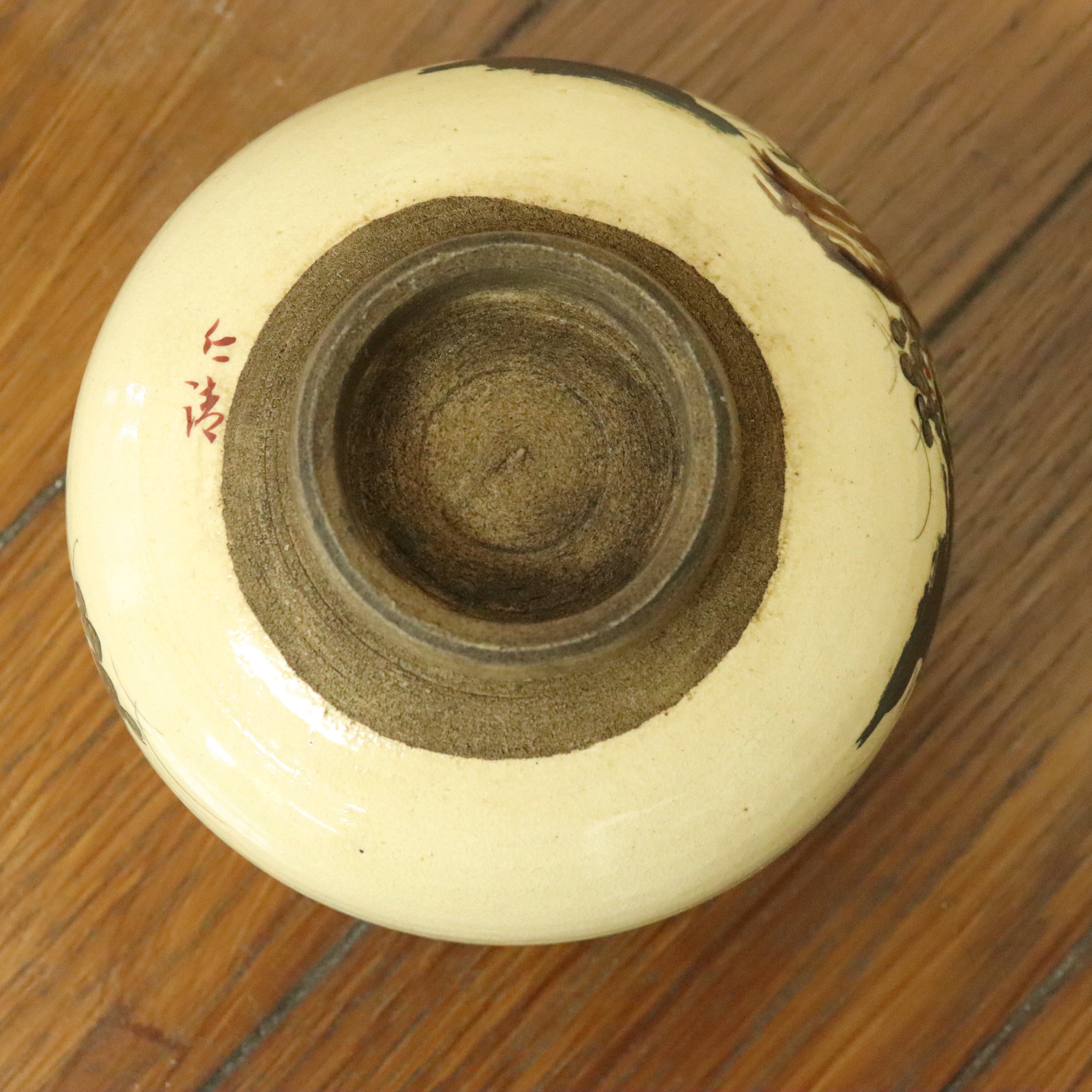
高台の部分に「仁清」の銘が入っています。
京焼のうちでもこのようなきなりの素地に、金襴手の、貴族趣味風の衣装を施したものは粟田焼の特徴で、別名京薩摩とも呼ばれます。
鹿児島県の焼き物である、「薩摩焼」に倣った見た目であることから、そのような名称がつけられました。
This tea bowl is a later copy made in the style of Nonomura Ninsei, a master Kyoto ware craftsman of the Edo period.
It has an elegant and gentle appearance, and features a design of an ox-cart in beautiful gold and color.
The inscription "Ninsei" is inscribed on the base.
Among Kyoto ware, this type of beige base decorated with aristocratic-style clothing in gold brocade is a characteristic of Awata ware, and is also known as Kyo-Satsuma ware.
It was given this name because its appearance imitates "Satsuma ware," a type of pottery from Kagoshima Prefecture.
薩摩焼も京焼や九谷焼と並び、
技術力の高さ・美しさから、最上位のものとされます。
野々村仁清は、粟田で焼物を修業したとも伝えられています。伝説的な名工のルーツとなる粟田焼。上品で気品のある美しさが魅力的な焼き物です。
Satsuma ware is regarded as one of the highest forms of pottery alongside Kyoto and Kutani ware, due to its high level of craftsmanship and beauty. It is said that Ninsei trained in pottery in Awata. Awata ware, which became the root of the legendary master potter, is a captivating pottery known for its elegant and graceful beauty.
李朝 "LIcho" - korean old potterly
日本の茶道と李朝
The relationship between Japanese tea ceremony and the Korean Joseon dynasty
李朝は韓国の李氏朝鮮時代のことで、14世紀〜20世紀まで続きましたが、特に17世紀ごろまでの陶磁器が好まれます。
日本人好みな李朝陶磁は日本に輸入され、茶道具以外の器でも茶碗や水指などの茶道具に見立てられ、茶の席で用いられました。
李朝やその前時代の高麗の茶器は、ほかのものと比べ茶道具の中でも、最も格式が高いものとされていたようです。
日本の茶道の中でのこういった「見立て」文化はユニークな側面です。
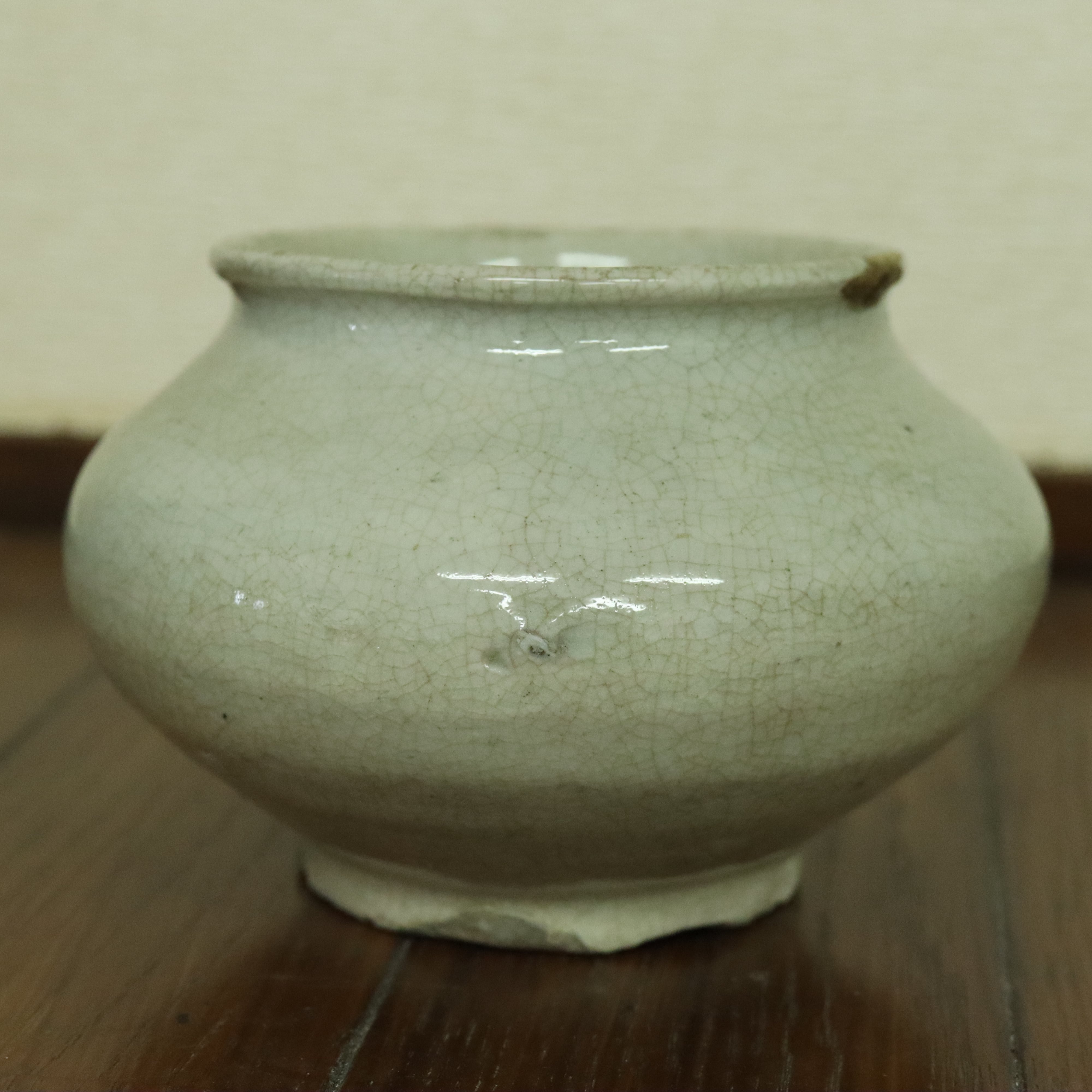
↑ 李朝 塩笥壺(塩やみそを入れた壺)
Joseon Dynasty salt jar (a jar for storing salt or miso)
The Joseon Dynasty refers to the period of the Lee dynasty in Korea, which lasted from the 14th century to the 20th century, but ceramics from around the 17th century are particularly favored. Joseon ceramics that appeal to the Japanese were imported to Japan, and even pieces other than tea utensils were treated as tea utensils such as tea bowls and water jars, being used in tea ceremonies. Tea utensils from the Joseon period and the preceding Goryeo period were considered to have the highest status among tea utensils compared to others. This culture of 'mitate' (seeing something in a different context) within Japanese tea ceremonies is a unique aspect.